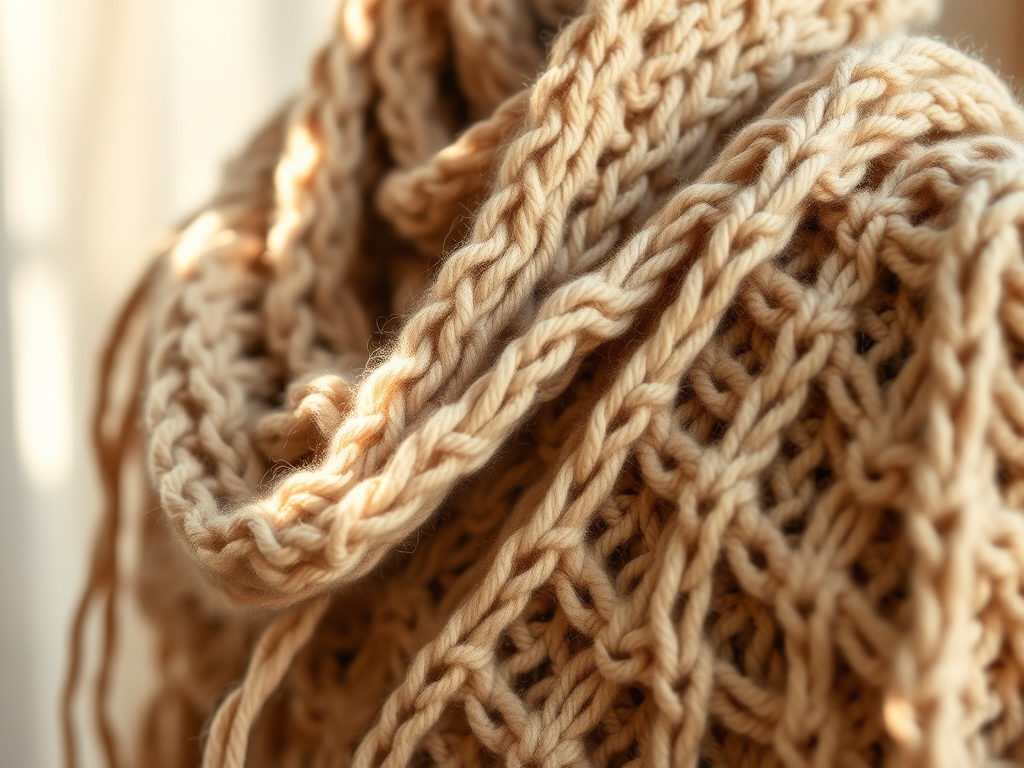
Imagine the scent of raw, unspun silk mingling with the cool, metallic tang of stainless steel needles. That is the aroma of a masterpiece in progress. When you begin crafting Hand Knit Heirloom Shawls, you are not just following a pattern; you are engineering a structural marvel designed to last for a century. The fiber feels alive in your hands. It possesses a specific tensile strength that resists the gravity of its own weight. As you cast on, you can feel the elastic memory of the wool. It snaps back with a tactile click against the needle tips. We are diving deep into the physics of lace today. We are looking for that perfect balance between negative space and structural integrity. This is about creating a garment that captures the light of a cathedral while maintaining the warmth of a mother's embrace. Every stitch is a calculated decision in tension and geometry. We are building a legacy, one yarn over at a time.
THE STUDIO KIT
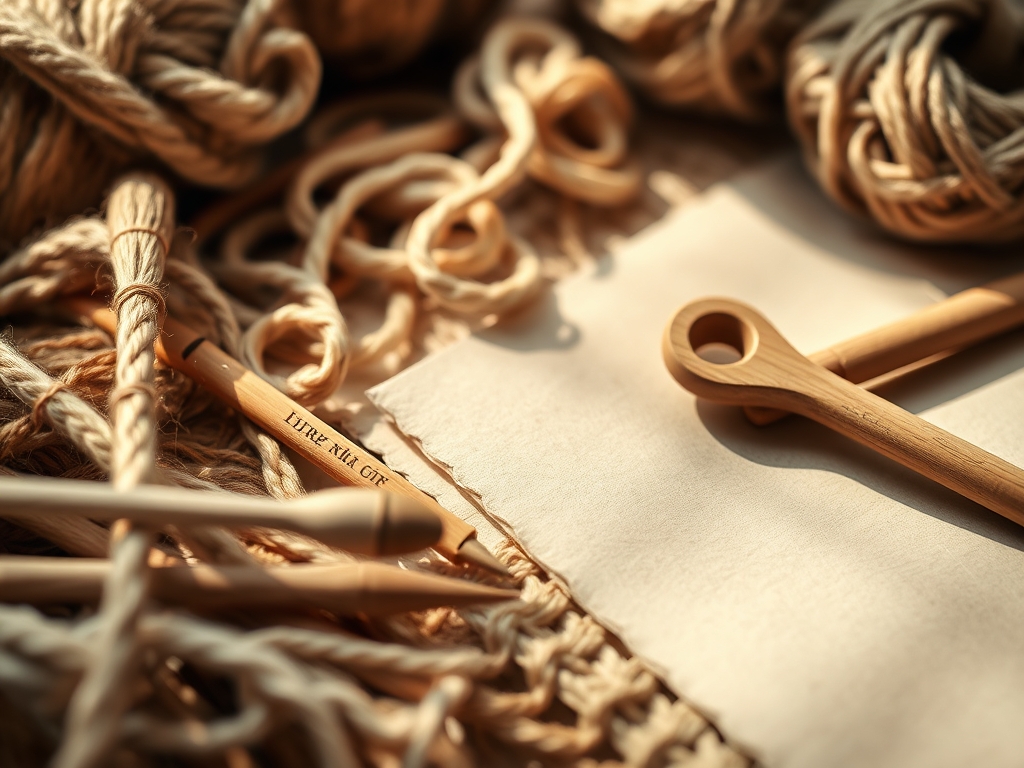
To execute these six intricate laces, your toolkit must be as precise as a jeweler's bench. You need lace-weight yarn with a high twist count. This ensures the individual plies do not delaminate during complex maneuvers. I recommend a blend of 70 percent extra-fine merino for its crimp and 30 percent mulberry silk for its high refractive index and tensile strength. Your needles should be sharp, lace-tipped circulars. The tapered points act like a caliper, allowing you to navigate three-to-one decreases without splitting the delicate protein fibers.
You will also need a set of stainless steel blocking wires. These are essential for stretching the lace to its final dimensions, a process that relies on the hygroscopic nature of natural fibers to "set" the shape. For material substitutions, if you cannot source high-grade silk, look for Tencel or bamboo. These cellulose fibers offer a similar drape but have less "spring" than wool, meaning you must tighten your gauge to compensate for the lack of natural elasticity. Keep a magnifying lamp and a fine-tipped crochet hook nearby for picking up dropped stitches. These are your surgical tools for maintaining the structural integrity of the mesh.
THE TEMPO
The timeline for a christening shawl is a marathon, not a sprint. You are looking at roughly 150 to 200 hours of active labor. The "Maker's Rhythm" is governed by the frequency of the lace repeats. The first phase, the cast-on and setup, is slow and deliberate. It requires 100 percent cognitive load to establish the mathematical foundation. Once you enter the body of the shawl, you develop a muscle memory for the yarn overs and decreases. This is the flow state. However, the final border, often involving hundreds of stitches per row, requires a different tempo. You must account for hand fatigue and the microscopic friction of the yarn against your skin. Plan for three weeks of steady knitting, followed by a full 48 hours for the washing and blocking phase. This final step is where the physics of "wet-blocking" allows the fibers to relax and lock into their new, expanded geometry.
THE CORE METHOD
1. The Lily of the Valley Eyelet
This lace relies on a central vertical axis. You create a series of yarn overs that increase the surface area of the fabric, followed by a centralized double decrease. The Mastery Tip here involves managing surface tension. If your yarn overs are too loose, the "bell" of the flower will sag. Use your pinky finger as a secondary tension regulator to ensure each loop has the exact same diameter.
2. The Diamond Trellis Mesh
This is a geometric grid that uses slanted decreases to create a lattice effect. The physics of this stitch involves directional force. A "knit two together" leans to the right, while a "slip-slip-knit" leans to the left. Mastery Tip: Observe the alignment in the step-by-step photos to ensure your decreases create a perfect 45-degree angle. This structural alignment prevents the shawl from "biasing" or twisting to one side.
3. The Traditional Feather and Fan
This classic motif creates a scalloped edge through a rhythmic expansion and contraction of the stitch count. It utilizes the capillary action of the yarn during blocking to emphasize the waves. Mastery Tip: When working the "four-together" sections, use the very tip of your needle to grab the loops. This reduces the mechanical stress on the yarn, preventing the fibers from fraying or snapping under the high-pressure decrease.
4. The Victorian Rosebud
This intricate lace features small "nops" or bobbles that add three-dimensional texture. This adds mass and density to specific points in the fabric. Mastery Tip: To keep your rosebuds crisp, knit into the back of the stitch on the following row. This "twists" the base of the bud, locking the extra volume into place and preventing it from receding into the background mesh.
5. The Crown of Glory
A complex lace that involves wrapping the yarn multiple times around the needle to create elongated stitches. This creates a high degree of porosity in the fabric. Mastery Tip: Consistency is key. Use a sliding gauge to check the length of your elongated stitches. If the wraps are inconsistent, the "crown" will look lopsided. The goal is a uniform distribution of negative space.
6. The Scalloped Edging Graft
The final lace is often knitted perpendicularly to the main body and attached using a Grafting technique. This creates a seamless join that can withstand the weight of the entire shawl. Mastery Tip: Maintain a "live stitch" count. By matching the rate of the edging to the loops of the body, you ensure the structural load is distributed evenly across the entire perimeter of the garment.
THE TECHNICAL LEDGER
Maintenance of an heirloom piece requires an understanding of protein fiber degradation. Silk and wool are susceptible to UV damage and oxidation. To ensure longevity, never hang the shawl; the weight will cause the lace to stretch permanently. Always store it flat.
Material Variations:
- Sustainable: Organic Merino sourced from non-mulesed sheep.
- Recycled: Reclaimed cashmere lace, though this has lower tensile strength.
- Premium: Vicuna or Qiviut for extreme thermal properties and softness.
The Correction:
- The Loose Yarn Over: If a hole is too large, use an awl to gently redistribute the excess yarn into the neighboring stitches.
- The Split Ply: If you pierce the yarn, do not leave it. Backtrack and re-knit. A split ply is a structural weak point that will fail during blocking.
- The Tension Drift: If your gauge changes mid-project, steam the work lightly on the needles to "reset" the fiber memory before continuing.
Studio Organization: Store your project in a breathable cotton bag. Avoid plastic, which can trap moisture and lead to mildew. Keep a desiccant pack in your knitting basket to manage humidity, as moisture can change the "drag" of the yarn on your needles.
THE FINAL REVEAL
When you unpin that shawl from the blocking mats, it is a transformative moment. What was once a crumpled, wet mass of string is now a crisp, architectural wonder. The lace has opened up to reveal a galaxy of intricate geometric patterns. It feels light as air but possesses the structural integrity to be passed down through generations. You have successfully balanced the physics of tension with the artistry of lace. This is more than a shawl; it is a mathematical proof of your skill and patience.
STUDIO QUESTIONS
What is the best fiber for a christening shawl?
A blend of merino wool and silk is ideal. The wool provides the necessary elasticity and memory for blocking, while the silk adds tensile strength and a lustrous finish that reflects light beautifully in photos.
How do I fix a mistake five rows down?
Use "lifelines" every ten rows. If you spot an error, you can safely unravel to the cotton thread lifeline. This prevents the delicate lace stitches from laddering and losing their structural orientation.
Why does my lace look messy before blocking?
Lace is designed to be "over-stretched." Before blocking, the yarn is in a relaxed, crimped state. Wet-blocking breaks the hydrogen bonds in the fiber, allowing you to pin the lace into its intended, high-definition geometry.
Can I use a different yarn weight?
Changing the weight alters the scale and drape. A heavier yarn will make the lace motifs look chunky and may result in a shawl that is too heavy for a small infant to wear comfortably.
How do I prevent the edges from curling?
Incorporate a "Garter Stitch" or "Seed Stitch" border. These patterns have a balanced ratio of knits and purls, which neutralizes the internal torque of the fabric and ensures the shawl lies perfectly flat.