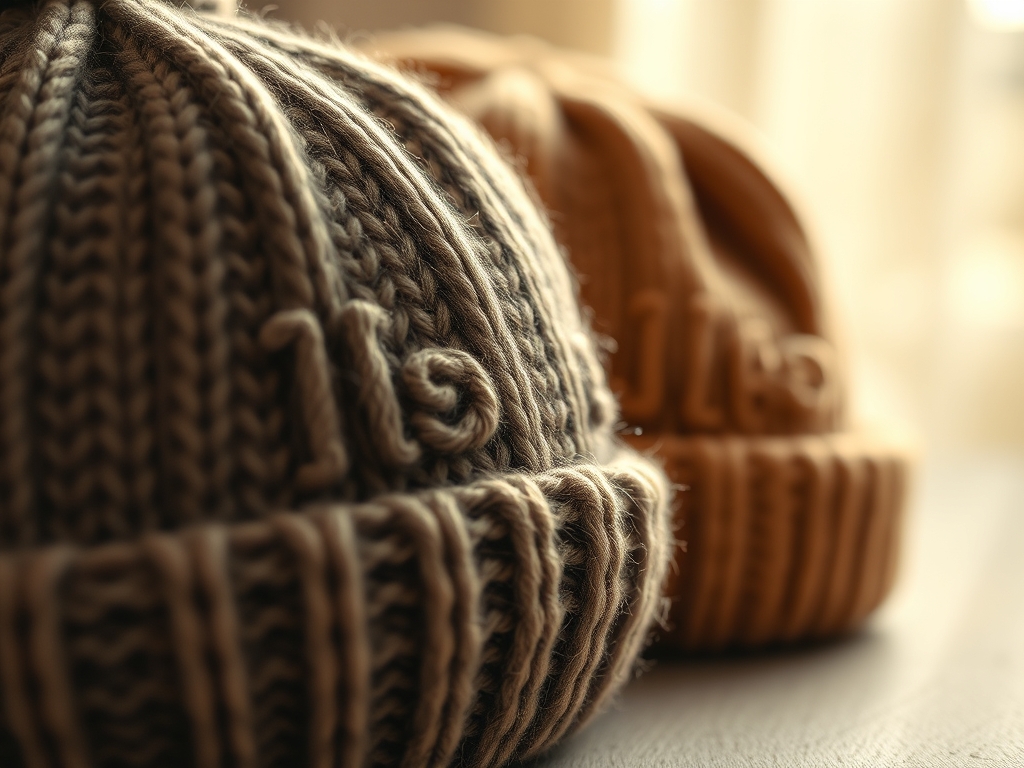
Grab your favorite mug and clear some table space because we are diving deep into the tactile world of fiber arts. There is a specific, electric thrill that comes from feeling a high-quality skein of wool slide between your fingers. It is about the resistance of the fibers and the way the light catches the crimp of the wool. When we talk about crafting Personalized Knitted Hats, we are not just following a sequence of loops; we are engineering a micro-climate for the human scalp. The physics of heat retention relies entirely on the pockets of air trapped within the fiber structure. If the tension is too loose, the thermal energy escapes. If it is too tight, the fabric loses its elasticity and becomes uncomfortable. We are aiming for that perfect structural sweet spot where the crown follows the natural curve of the parietal bone while the ribbing provides enough grip to defy gravity. It is time to turn raw, unspun potential into a wearable legacy for every member of your inner circle.
THE STUDIO KIT
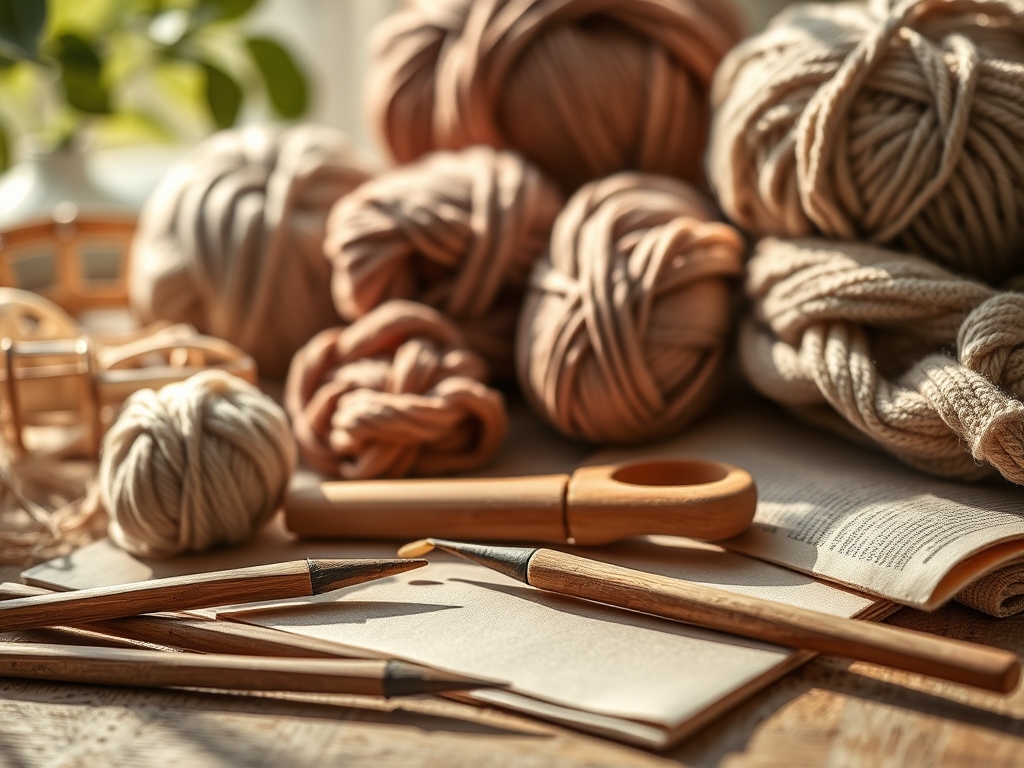
To achieve professional results, you must treat your knitting bag like a precision laboratory. Your primary tools are your needles; I recommend surgical-grade stainless steel or carbon fiber for their high tensile strength and smooth surface finish. These materials allow the yarn to glide with minimal friction, which prevents the snagging of delicate plies. You will also need a digital caliper to measure your gauge accurately. While most crafters rely on a simple ruler, a caliper allows you to measure the diameter of your yarn and the exact width of your stitches to the millimeter. This ensures that the sizing remains consistent across all six patterns.
For the materials, look for a blend that offers both memory and softness. A 100 percent Merino wool is classic because the scales of the fiber lock together slightly to provide structural integrity. However, if you are working for family members with sensitive skin, a Merino-silk blend increases the luster and drape of the piece. For "Material Substitutions," consider alpaca for extreme warmth, though be warned that it lacks the "spring" of sheep wool. If you choose alpaca, you must adjust your stitch count to account for the lack of vertical recovery. Always keep a sharp pair of rotary cutters or specialized embroidery scissors on hand to ensure clean cuts that prevent the yarn from fraying at the ends.
THE TEMPO
The "Maker's Rhythm" is a psychological state where the repetitive motion of the needles syncs with your heart rate. It is not just about speed; it is about the cadence of the tension. For a standard adult-sized hat, you should budget approximately six to eight hours of active construction time. The "Casting On" phase is the most critical and takes about twenty minutes of intense focus. This is where you set the foundation for the entire project.
The "Body" of the hat is the meditative phase, taking up the bulk of your time. This is where you can settle into a steady flow, maintaining a consistent gauge of five stitches per inch. Finally, the "Decreasing" phase at the crown requires about forty-five minutes of technical precision. You are essentially collapsing a cylinder into a dome, which requires mathematical accuracy to ensure the decreases are symmetrical. Do not rush this part. If your rhythm breaks, your tension will shift, and you will see a visible "line" in the fabric where your mood changed.
THE CORE METHOD
1. Establishing the Foundation
Start by calculating your head circumference and subtracting two inches for "negative ease." This ensures the hat stays on the head. Use a long-tail cast-on to provide a stretchy but firm edge. This technique uses two strands of yarn to create a built-in cord at the base of your work.
Mastery Tip: The science of the long-tail cast-on lies in its torsional balance. By twisting the yarn as you loop it, you create a structural "bumper" that prevents the edge of the hat from curling or losing its shape over time.
2. The Ribbing Architecture
Transition into a 2×2 rib (knit two, purl two). This creates a series of vertical columns that act like micro-springs. The ribbing must be worked on needles one size smaller than the main body to increase the fiber density at the pressure points of the forehead and ears.
Mastery Tip: Ribbing utilizes the elastic memory of the wool. By alternating the direction of the loops, you create a fabric that can expand to twice its width and snap back to its original dimensions without deforming the fibers.
3. Body Construction and Pattern Integration
Once the ribbing is complete, switch to your larger needles. This is where you integrate your personalized textures, whether it is a classic cable or a sleek stockinette. Ensure you are checking your work every ten rows against your caliper measurements to maintain uniformity.
Mastery Tip: When knitting cables, you are physically displacing the grain direction of the fabric. This creates a denser, multi-layered shield that traps significantly more air, making cabled patterns the warmest option for extreme cold.
4. Crown Shaping and Radial Decreases
To close the hat, you must decrease the number of stitches at a consistent rate. Use "SSK" (slip, slip, knit) for left-leaning decreases and "K2Tog" (knit two together) for right-leaning ones. This creates a visual "star" pattern at the apex of the head.
Mastery Tip: Radial decreases manage the surface tension of the knitted dome. By distributing the "reduction points" evenly, you prevent the fabric from bunching or creating a "pointy" silhouette that ignores the natural ergonomics of the skull.
5. Weaving and Finishing
Cut the yarn, leaving a twelve-inch tail. Use a blunt tapestry needle to thread the tail through the remaining loops. Pull tight to secure the center, then weave the end into the interior of the fabric following the path of the existing stitches.
Mastery Tip: This is known as duplicate stitching. By mimicking the path of the yarn, you increase the friction between the tail and the fabric, ensuring the knot never unravels even under high mechanical stress.
6. Blocking for Permanence
Submerge the finished hat in lukewarm water with a pH-neutral wool wash. Gently squeeze out the excess moisture (never wring!) and lay it flat on a foam board. Pin it to the exact dimensions required.
Mastery Tip: Blocking uses hydro-thermal setting to relax the fibers. The water breaks the hydrogen bonds in the wool, and as it dries, the fibers reform in their new, perfected positions, erasing minor tension inconsistencies.
THE TECHNICAL LEDGER
To keep your Personalized Knitted Hats in museum-quality condition, you must understand the chemistry of the fibers. Wool is naturally antimicrobial due to its lanolin content, but it is susceptible to "pilling" caused by abrasion. Use a specialized battery-operated fabric shaver or a fine-tooth comb to remove these pills without damaging the structural integrity of the yarn.
For "Material Variations," consider using recycled cashmere for a sustainable luxury feel. It has a shorter fiber length, so it requires a tighter gauge to prevent shedding. If you want a "Premium" finish, look for hand-dyed yarns where the pigment has been applied in small batches. This creates a "variegated" look that adds depth to the visual texture.
The Correction: Common Pitfalls
- The Ladder: A gap between needles when using double-pointed needles. Fix: Pull the first two stitches of every new needle extra tight to bridge the tension gap.
- The Flare: The bottom edge is too loose. Fix: Use a "tubular cast-on" for a professional, machine-made look that maintains high tensile recovery.
- The Twist: Accidentally twisting the cast-on row. Fix: Lay your work flat on the table before joining the circle to ensure all "bumps" face the center.
For "Studio Organization," store your yarn in airtight containers with cedar blocks. This prevents keratin-eating pests from compromising your stash. Label your projects with the needle size and dye lot number to ensure consistency if you need to pause the project for a long duration.
THE FINAL REVEAL
There is nothing quite like the moment you pull a freshly blocked hat over your ears. The fit is snug but breathable; the texture is rich; and the knowledge that you engineered this piece from a single strand of string is incredibly empowering. These six patterns offer a range of technical challenges that will elevate your skills from a hobbyist to a fiber technician. Whether you are gifting them or wearing them yourself, these hats represent a perfect fusion of physics and fashion.
STUDIO QUESTIONS
How do I choose the right size for a child?
Measure the head circumference and subtract one inch for growth. Children's hats require a higher percentage of nylon in the yarn blend to withstand high-impact play and frequent machine washing without losing their structural shape.
Why does my hat look "wonky" before blocking?
Unblocked knitting reflects the uneven tension of your hands. The hydrogen bonds in the wool are currently "frozen" in stressed positions. Wet blocking allows these fibers to relax and redistribute themselves into a perfectly uniform grid.
Can I use cotton for these patterns?
Cotton lacks elastic recovery. If you use 100 percent cotton, the hat will stretch out and stay stretched. If you must use cotton, choose a blend with at least 30 percent wool or elastic fiber to maintain the fit.
What is the best way to fix a dropped stitch?
Use a small crochet hook to "ladder" the stitch back up to the current row. This maintains the interlooping structure of the fabric without having to unravel hours of work. It is a simple mechanical fix for a common error.