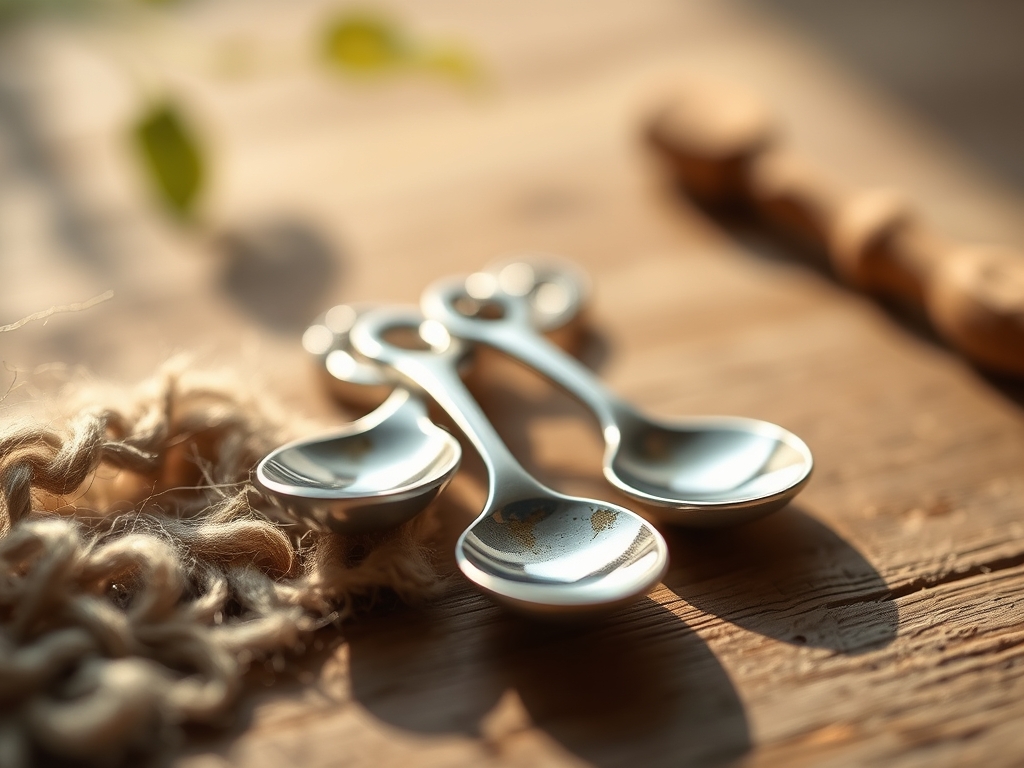
The smell of hot metal and citrus flux is better than a double espresso on a Tuesday morning. When you hold a tiny slug of .925 sterling silver, you are not just holding jewelry; you are holding a legacy of molecular bonds and cold-working potential. We are diving deep into the microscopic world of Custom Silver Spoon Charms today. This is not your grandmother's hobby. We are talking about manipulating the grain structure of precious metals to create something that feels like a whisper but lasts for generations. The tactile weight of silver is deceptive. It feels soft under the torch, yet its tensile strength allows us to hammer it into delicate, paper-thin bowls that wont snap under pressure. You need to feel the vibration of the jeweler's saw through your fingertips to truly understand how the silver resists and then yields to your intent. We are going to master the physics of the miniature, ensuring every curve of these tiny spoons reflects light with mathematical precision. Grab your safety glasses; we are about to turn raw metal into heirlooms.
THE STUDIO KIT
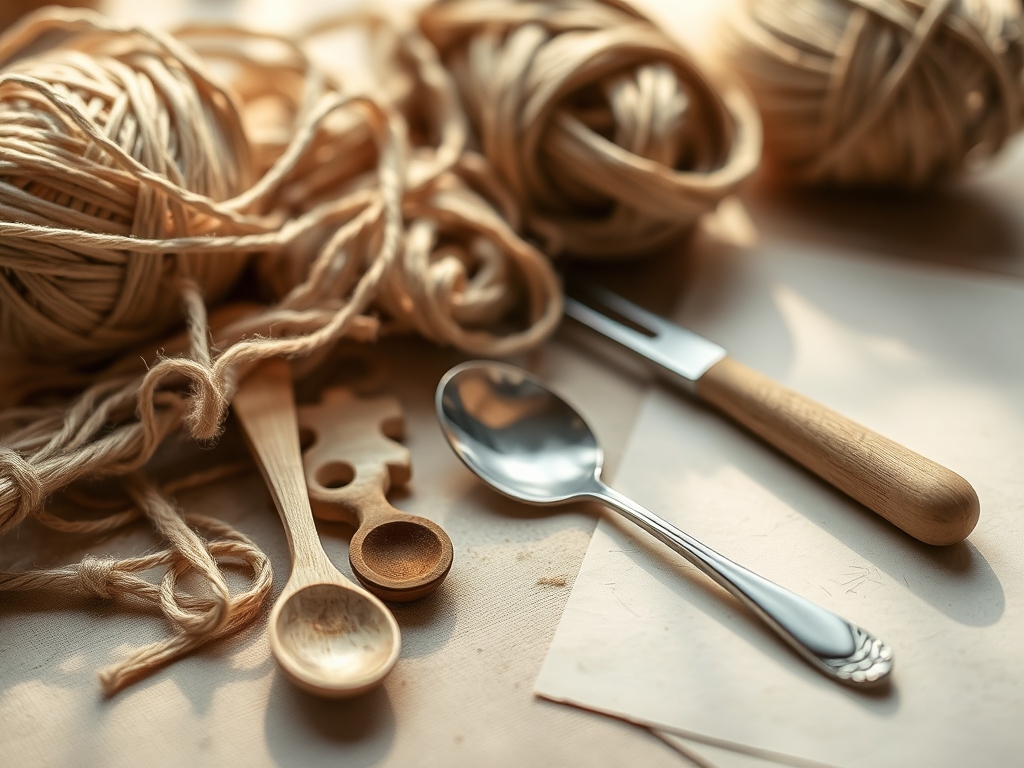
To execute Custom Silver Spoon Charms with professional rigor, your workbench needs more than just enthusiasm. You require a jeweler's saw with 4/0 blades for high-precision cutting. The teeth on these blades are so fine they require a lubricant like beeswax to prevent friction-induced snapping. You will also need a dapping block and punches, which are hardened steel tools used to create the spherical concavity of the spoon bowl. For the handle, a ball-peen hammer allows you to move the metal atoms, thinning the silver while increasing its hardness through a process called work-hardening.
Measurement is non-negotiable. Use digital calipers to ensure your spoon bowls are consistent to within 0.1mm. For the finish, a flex shaft or rotary tool with radial bristle discs will remove fire scale without softening the crisp edges of your design. If you cannot source sterling silver, a high-quality pewter is a viable material substitution; it has a lower melting point and is more malleable, though it lacks the prestigious luster and durability of silver. Always keep a burnishing tool handy to compress the surface of the metal, which closes the pores and creates a mirror-like reflection.
THE TEMPO
The maker's rhythm is a dance between heat and cold. Total production time for a single charm is approximately three hours, but this is split into distinct phases of intensity. The Layout and Piercing Phase takes 45 minutes; this is high-focus work where one wrong twitch of the saw blade ruins the silhouette. Next is the Forming Phase, a 30-minute window of rhythmic hammering where you must listen to the pitch of the metal. As the silver hardens, the "ring" of the hammer becomes higher in pitch, signaling that it is time to anneal.
The Annealing and Pickling Phase occurs multiple times, taking about 10 minutes per cycle. This involves heating the silver to a dull cherry red to reset the crystalline structure, followed by an acid bath to remove oxidation. Finally, the Finishing and Detailing Phase demands a full hour. This is where you transition from coarse abrasives to high-polish compounds. The tempo slows down here; you cannot rush the physics of friction if you want a flawless, scratch-free surface.
THE CORE METHOD
1. Precision Template Transfer
Begin by scribing your spoon silhouette onto a 20-gauge silver sheet using a steel awl. This gauge provides the perfect balance between structural integrity and weight for a baby charm. Ensure the grain of the metal runs parallel to the spoon handle to prevent snapping during the bending process.
Mastery Tip: Metals have a crystalline structure similar to wood grain. By aligning your design with the rolling direction of the sheet metal, you maximize the ductility of the handle, allowing it to curve without developing microscopic stress fractures.
2. The Piercing Path
Using your jeweler's saw, cut slightly outside your scribed line. Keep the blade vertical and use long, fluid strokes. The silver will provide resistance; let the saw do the work rather than forcing the blade forward, which causes "wandering" and jagged edges.
Mastery Tip: Use the physics of mechanical advantage. Keep your elbow at a 90-degree angle and move your entire forearm. This stability ensures the blade remains perpendicular to the silver, resulting in a square edge that requires less filing later.
3. Dapping the Bowl
Place the circular end of your blank over a depression in the dapping block that is slightly larger than the metal. Strike the wooden or brass punch firmly. Gradually move to smaller depressions to deepen the bowl. This creates a compound curve that significantly increases the piece's structural rigidity.
Mastery Tip: This process relies on compressive stress. As you hammer the metal into the die, you are forcing the atoms closer together. If you skip annealing between dapping stages, the silver will become brittle and "work-hardened," eventually cracking.
4. Refining the Profile
Use a set of needle files to smooth the edges of the spoon. Start with a #2 cut file for rapid removal and finish with a #6 for a silk-like texture. Pay close attention to the "neck" where the handle meets the bowl; this is the primary stress point.
Mastery Tip: Use a "draw-filing" technique, pulling the file across the edge sideways. This utilizes the shear strength of the file's teeth to create a perfectly flat, square edge that is ready for the final burnish.
5. Custom Texture and Hallmark
Place the charm on a steel bench block. Use a tiny chasing hammer to add a "planished" texture to the handle, or use a steel stamp to add the hallmark and date. This is the moment the object gains its identity as a Custom Silver Spoon Charm.
Mastery Tip: When stamping, use a single, heavy blow. A second strike often causes "ghosting" because the metal has already undergone plastic deformation from the first hit, causing the stamp to bounce.
6. The Molecular Polish
Start with 400-grit sandpaper and work up to 2000-grit. Finish with a rouge-impregnated buffing wheel. The goal is to remove all directional scratches so that light reflects off the surface in a single, coherent wave.
Mastery Tip: Polishing is actually a form of micro-abrasion. You are replacing large scratches with smaller ones until they are invisible to the naked eye. The final "bloom" of the silver occurs when the surface is smooth enough to allow for total internal reflection.
THE TECHNICAL LEDGER
Maintenance & Longevity: Silver reacts with sulfur in the air to create silver sulfide (tarnish). To maintain the charm, it should be worn often; the natural oils in skin actually provide a protective barrier. For long-term storage, use an airtight poly-bag with an anti-tarnish strip.
Material Variations:
- Recycled Sterling: Environmentally conscious and identical in molecular structure to mined silver.
- Argentium Silver: Contains germanium, which increases tarnish resistance and eliminates fire scale.
- Gold Vermeil: A thick layer of 18k gold over the silver, requiring a 2.5-micron thickness for durability.
The Correction:
- The Mistake: The bowl is lopsided after dapping. The Fix: Re-anneal the metal and use a leather mallet to gently flatten the edges on a wooden block before re-centering in the dapping die.
- The Mistake: Saw blade keeps breaking. The Fix: Check your tension; the blade should "ping" like a guitar string. Apply more beeswax lubricant.
- The Mistake: Deep scratches won't buff out. The Fix: You skipped a sandpaper grit. Go back to 600-grit and ensure all previous marks are gone before moving forward.
Studio Organization: Store your silver sheets in a dry, flat drawer. Organize your files in a vertical rack to prevent the teeth from dulling against each other. Keep your flux and pickle in sealed, labeled containers to prevent acidic vapors from rusting your steel tools.
THE FINAL REVEAL
Look at that glow! Your Custom Silver Spoon Charms are finally finished, and they are breathtaking. There is a specific kind of magic that happens when a flat sheet of metal takes on three-dimensional volume. The way the light pools in the bowl of the spoon and dances along the hammered handle is pure physics in action. These charms have a "heft" that feels expensive and intentional. You have successfully navigated the complexities of annealing, dapping, and polishing to create a miniature masterpiece. It is not just a charm; it is a tiny, shimmering testament to your technical skill and creative vision.
STUDIO QUESTIONS
How do I prevent silver from turning black?
Keep silver in airtight containers with anti-tarnish tabs. Regular wear also prevents tarnish, as friction from skin and clothing naturally polishes the metal. Avoid exposing the charm to chlorine, bleach, or heavy perfumes which accelerate oxidation.
What is the best silver thickness for charms?
A 20-gauge (0.8mm) sheet is the industry standard. It provides enough thickness for deep engraving and structural integrity while remaining light enough to wear comfortably on a delicate chain or a baby's keepsake bracelet.
Can I fix a scratch on a polished charm?
Yes, use a specialized silver polishing cloth for light scratches. For deeper gouges, you must use progressively finer grits of sandpaper (800 to 2000) followed by a polishing compound like Tripoli or rouge to restore the mirror finish.
Why did my silver crack while hammering?
This is caused by work-hardening. As you hammer, the metal's grains become compressed and brittle. To fix this, you must anneal the silver by heating it until it glows dull red, then quenching it in water to soften the structure.