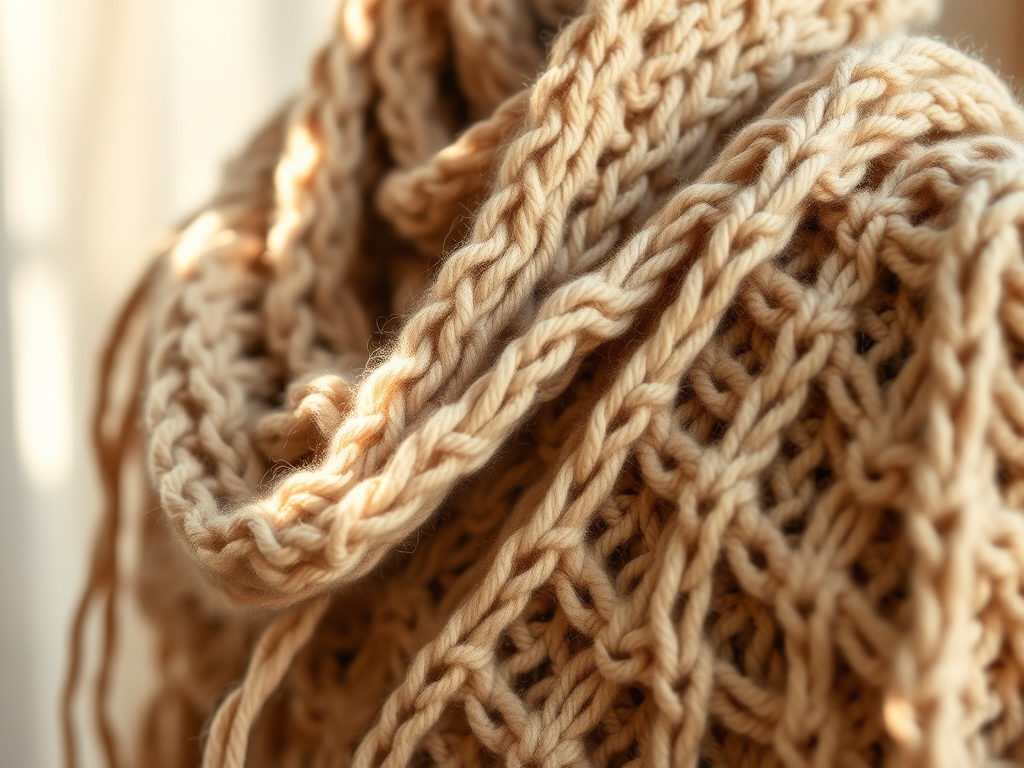
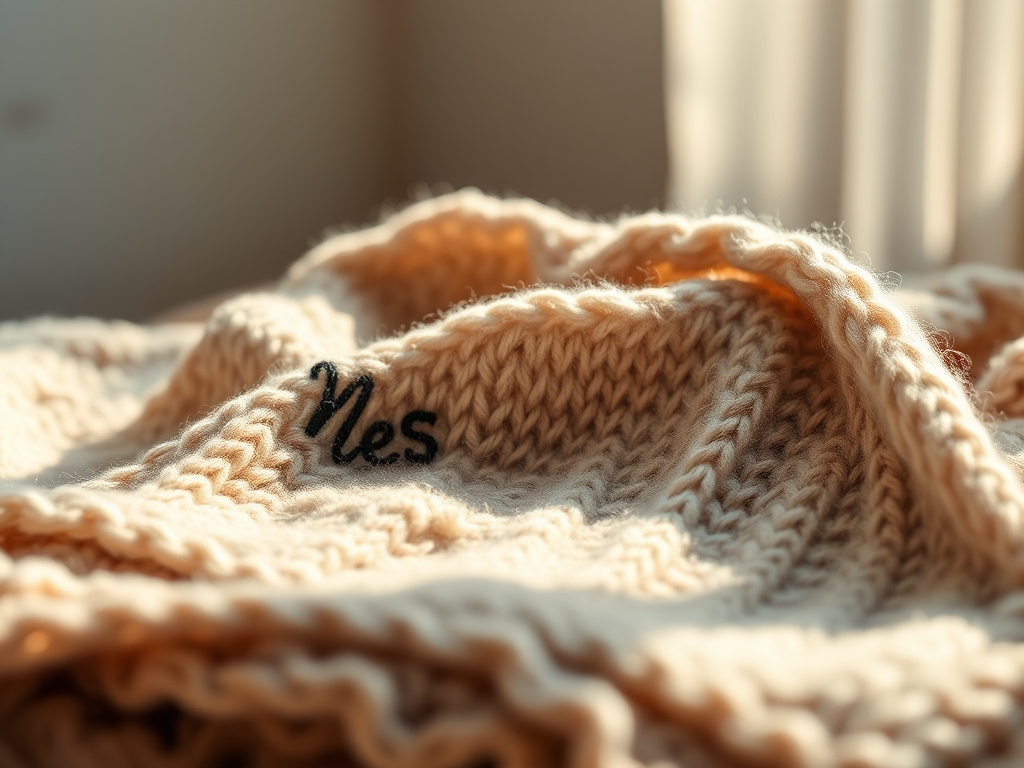
Imagine the weight of a cloud settling over your shoulders; only this cloud is dense, warm, and carries the structural integrity of high-grade merino. When we talk about personalized knitted blankets, we are not just discussing a hobby; we are engineering a tactile sanctuary for your master suite. You can feel the tensile strength of the roving as it glides through your fingers. There is a specific physics to chunky wool that demands respect. If the twist is too loose, the fibers migrate and pill; if it is too tight, you lose that signature loft that traps heat through convection. We are aiming for that perfect equilibrium where the gauge is massive but the drape remains fluid. You are about to transform raw, unspun fiber into a structural masterpiece that anchors your entire room. This is about more than just warmth. It is about the mathematical satisfaction of a perfectly executed stitch and the sensory luxury of premium protein fibers against your skin.
THE STUDIO KIT
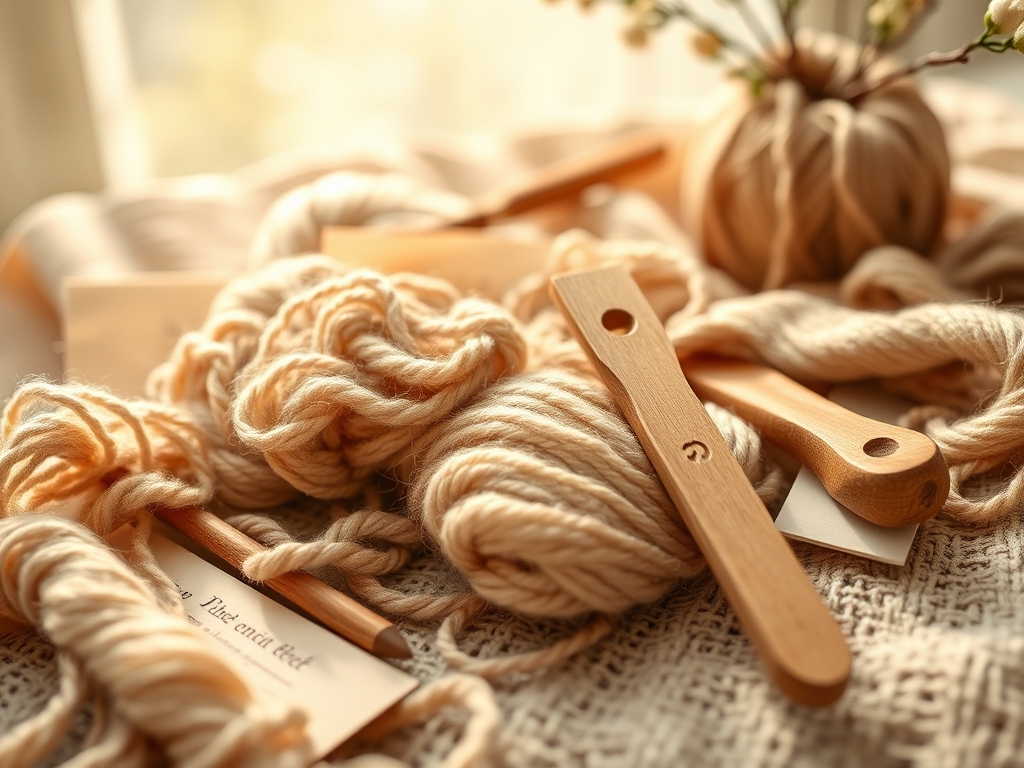
To execute personalized knitted blankets at a professional level, you need more than just yarn. You need an arsenal of tools designed to handle the sheer mass of chunky wool. First, consider your needles. For a master bed project, you will likely need 25mm to 40mm circular needles with a reinforced cable. The cable must be long enough to support the weight of the entire piece; otherwise, the gravitational pull will distort your stitches at the edges. If you prefer the tactile intimacy of arm knitting, your own radius and ulna bones become the tools, requiring consistent ergonomic positioning to maintain a uniform tension.
You should also keep a pair of high-carbon steel shears nearby for clean cuts that do not crush the fiber ends. A large-scale crochet hook is essential for weaving in ends, as the diameter of the wool exceeds the capacity of any standard tapestry needle. For material substitutions, if pure merino is outside the budget, look for a wool-acrylic blend with a high "S-twist" to prevent shedding. Synthetic cores can actually provide better structural longevity for high-traffic blankets, though they lack the natural moisture-wicking properties of 100 percent wool. Always check the micron count; anything under 23 microns will feel soft, while higher counts may feel scratchy against the skin.
THE TEMPO
The maker's rhythm is a psychological state where your heart rate aligns with the repetitive motion of the needles. For a king-sized blanket, expect a total production time of six to ten hours of active labor. However, this is broken into phases. The "Foundation Phase" (casting on) takes about forty minutes of intense focus to ensure the base chain is not too tight. The "Bulk Phase" is where you find your flow, typically knocking out one row every eight to twelve minutes. Finally, the "Finishing Phase" requires an hour of meticulous weaving and "blocking" to set the stitches. Because chunky wool is heavy, the physical fatigue on your deltoids is real; plan for twenty-minute intervals followed by a five-minute stretch to maintain your ergonomic health.
THE CORE METHOD
1. The Foundation Chain
Start by creating a slip knot that is snug but not restrictive on your tool. Use a long-tail cast-on method to provide extra elasticity at the base. This is crucial because a rigid edge will snap under the weight of the blanket over time.
Mastery Tip: This step relies on understanding the modulus of elasticity. By leaving a slightly larger loop in your foundation chain, you allow the wool to expand and contract without compromising the structural integrity of the first row.
2. Maintaining the Gauge
As you work the knit stitch, ensure every loop is pulled to the same height. Use your forearm or a physical spacer to check the diameter. If the loops vary, the blanket will look asymmetrical and the heat distribution will be uneven.
Mastery Tip: Consistency here is about managing surface tension. If you pull the yarn too tight, you compress the air pockets within the fiber, significantly reducing the thermal insulation properties of the wool.
3. Joining New Skeins
When one ball ends, do not simply tie a knot. Use a "felted join" by fraying the ends of both pieces, overlapping them, and rubbing them vigorously between your palms with a drop of water. The heat and friction cause the scales on the wool fibers to interlock.
Mastery Tip: This process utilizes capillary action to draw the moisture into the fiber core, allowing the protein scales to swell and fuse, creating a seamless bond that is as strong as the rest of the strand.
4. The Bind Off
When you reach the desired length, cast off loosely. You want the top edge to have the same "give" as the bottom edge. Use a crochet hook one size larger than your needles to ensure the final row has enough room to breathe.
Mastery Tip: This prevents stress concentration. A tight bind-off creates a "hinge point" where the blanket is likely to tear or distort when pulled up toward the pillows on a master bed.
THE TECHNICAL LEDGER
Maintenance & Longevity: Chunky wool is a "living" material. To prevent degradation, never hang your blanket; the weight will stretch the fibers beyond their elastic limit. Always store it flat. To clean, use a gentle wool soak and "dry flat" to maintain the original shape.
Material Variations:
- Recycled Wool: Sustainable but can have shorter fiber lengths, leading to more pilling.
- Vegan Acrylic: High durability and hypoallergenic, but lacks the "breathability" of natural protein fibers.
- Premium Cashmere Blends: The ultimate in luxury with a low micron count, but requires extreme care.
The Correction:
- The Dropped Stitch: If a loop slips, use your large crochet hook to "ladder" it back up to the current row immediately.
- Pilling: Do not pull pills off by hand. Use a dedicated fabric shaver or a sharp razor to shear the surface without tugging the internal fibers.
- Thinning Spots: If a section of roving looks thin, "needle felt" a small amount of matching wool into the area to reinforce the density.
Studio Organization: Store your wool in breathable cotton bags. Avoid plastic, as it can trap moisture and lead to mildew or fiber rot. Use cedar blocks to repel moths without the chemical scent of mothballs.
THE FINAL REVEAL
There is nothing quite like the moment you spread your finished piece across the master bed. The scale of the stitches creates a bold, architectural texture that instantly elevates the room's aesthetic. It is heavy, it is plush, and it is a testament to your technical skill. Every time you crawl under that weight, you will feel the specific "squish" of the wool and know that you engineered that comfort from scratch. It is the ultimate fusion of high-end design and DIY grit.
STUDIO QUESTIONS
How do I prevent my chunky blanket from shedding?
Shedding occurs when short fibers escape the twist. To minimize this, choose a "slightly felted" roving or a wool-acrylic blend. Periodically use a lint roller or a fabric shaver to remove loose surface fibers before they tangle into pills.
Can I wash a personalized knitted blanket in a machine?
Never machine wash heavy wool. The agitation causes "uncontrolled felting," turning your soft blanket into a stiff, shrunken mat. Instead, spot clean with cold water or use a professional dry cleaner who specializes in delicate natural fibers.
How much yarn do I need for a King size bed?
For a standard King size (approximately 80×90 inches), you will need roughly 12 to 15 pounds of chunky wool. This volume ensures full coverage and allows for the significant "take-up" that occurs with large-scale knit stitches.
Why is my blanket getting longer and narrower?
This is due to "gravitational creep." The weight of the chunky stitches pulls the fabric downward, stretching the loops. To fix this, lay the blanket flat and "scrunch" it horizontally to redistribute the fiber tension back into the width.