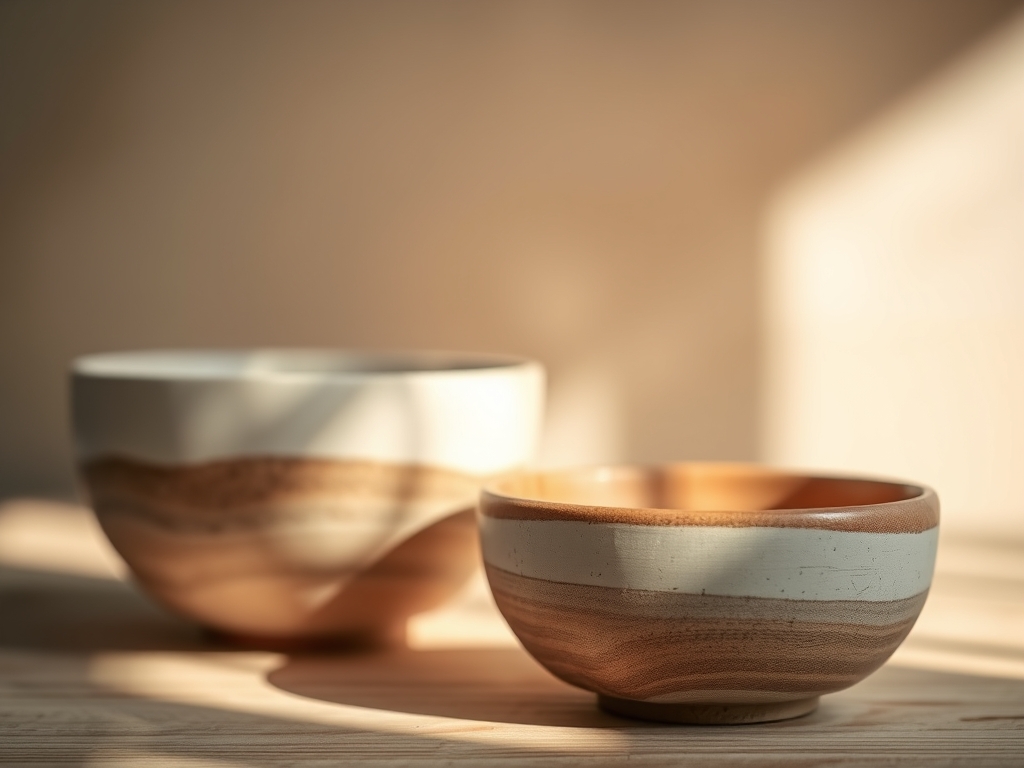
Wet clay is a fickle, gorgeous beast that demands your total attention before it even touches the wheel. You can feel the grit of the grog against your palms; those tiny particles of fired clay act like a skeletal system for the wet mass, providing the structural integrity needed to prevent collapse. When we talk about Hand Thrown Memory Bowls, we are discussing more than just a vessel. We are engineering a physical archive of a specific moment in time. The moisture content, or plasticity, must be perfect; too dry and it cracks under the pressure of your thumbs; too wet and it turns into a slumped mess of slip. As you center the ball, the centrifugal force fights your bracing forearms, creating a high stakes dance of physics and friction. Every rotation is a heartbeat. We are using the tensile strength of the clay body to defy gravity, pulling walls upward into a shape that will eventually hold memories, dates, or symbolic textures that tell a story only you and the recipient truly understand.
THE STUDIO KIT
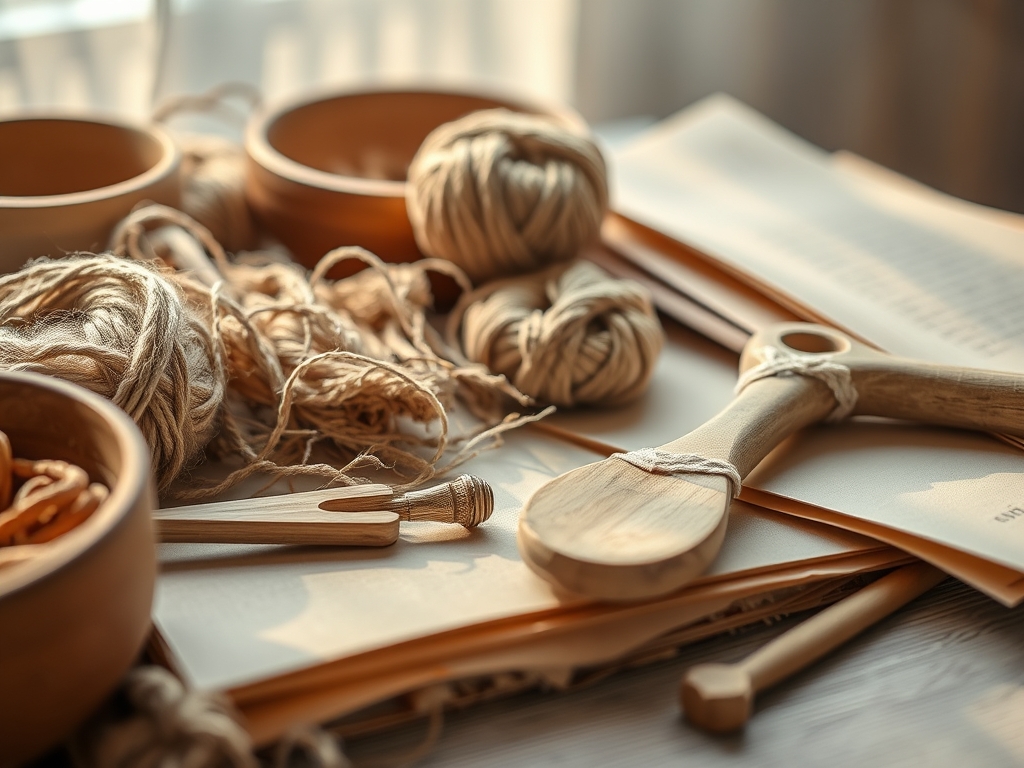
To master this craft, you need a kit that respects the chemistry of the medium. Start with a **high-fire stoneware clay body** containing at least 10 percent grog for stability during the drying phase. Your primary tool is the **potter’s wheel**, but the magic happens with the hand tools. You will need a **stainless steel rib** for compressing the floor of the bowl to prevent S-cracks, and a **wire clay cutter** with a high gauge to ensure a clean release from the bat. For the symbolic inscriptions, a **fine-point stylus or a surgical-grade awl** is essential for precision.
Material Substitutions: If you cannot access a kiln, you can substitute professional stoneware with a high-quality polymer clay, though you will lose the porous nature of traditional ceramics. In place of a professional rib, a flexible plastic scraper or even an old credit card can be used to burnish the surface. Instead of a bat, a simple piece of marine-grade plywood will suffice, provided it is sealed to prevent warping from water absorption.
THE TEMPO
The Maker's Rhythm is not about speed; it is about respecting the evaporation cycle. The initial throwing phase is a sprint, lasting roughly 15 to 20 minutes per piece. However, the "Leather Hard" phase is the critical waiting period. This takes anywhere from 12 to 24 hours depending on the humidity of your studio. During this window, the clay has lost enough moisture to be handled without deforming, yet it remains damp enough to trim and carve. The final drying, or "Bone Dry" stage, requires 3 to 7 days. If you rush this by placing it near a heater, the uneven shrinkage will cause catastrophic fractures. Finally, the firing cycle in the kiln takes about 48 hours, including the cooling period where the molecular structure of the silica vitrifies into glass.
THE CORE METHOD
1. Centering and Opening the Mass
Place your wedged clay firmly in the center of the wheel head. Increase the speed and use the heel of your palm to push the clay into a perfect, wobbless cone. Once centered, press your thumbs into the middle to create the floor.
Mastery Tip: This step relies on centripetal force. By keeping your elbows locked against your hips, you use your skeletal weight rather than muscle to overcome the clay's resistance, ensuring the density is uniform across the entire base.
2. Pulling the Walls for Symbolic Depth
Using a "pinch and lift" motion, pull the clay upward. For memory bowls, we want a wide, inviting flare. Keep your hands lubricated with slip to reduce friction, which can cause the walls to twist.
Mastery Tip: Observe the hydrodynamics of the clay. If the wall becomes too thin at the rim, the surface tension will break, and the bowl will "wobble" out of true. Keep the rim slightly thicker than the walls to maintain a circular silhouette.
3. Compressing the Floor
Once the shape is established, use your wooden rib to press down on the interior floor, moving from the center out to the wall. This aligns the clay particles and prevents the dreaded "S-crack" during the firing process.
Mastery Tip: This is an exercise in particle alignment. By compressing the base, you are forcing the flat, plate-like molecules of the clay to lay parallel, which significantly increases the structural load the bowl can handle.
4. Trimming the Foot Ring
After the bowl reaches the leather-hard stage, flip it over on the wheel. Use a loop tool to carve away excess clay from the bottom, creating a refined foot ring that lifts the vessel.
Mastery Tip: Trimming is about thermal expansion. A well-defined foot ring allows air to circulate under the bowl during firing, ensuring the piece heats and cools evenly, which prevents the base from cracking due to thermal shock.
5. Inscribing the Symbolic Designs
Using your fine-point awl, carve your seven symbolic designs. This might include a date in Roman numerals, a geographic coordinate, or a botanical sprig representing a specific month.
Mastery Tip: Use capillary action to your advantage. If the clay is at the perfect leather-hard state, the tool will slice through without leaving burrs. If the clay is too dry, the surface will shatter at a microscopic level, ruining the legibility of your design.
6. Burnishing the Surface
Take a smooth stone or a metal spoon and rub the carved areas and the rim. This compacts the surface further and gives the clay a natural, soft sheen even before glazing.
Mastery Tip: Burnishing reduces the porosity of the clay. By flattening the surface particles, you create a barrier that makes the finished piece more resistant to water penetration and staining over decades of use.
7. The Vitrification Firing
Load the bone-dry bowl into the kiln for the bisque fire, followed by a glaze fire. The heat will chemically transform the clay into a stone-like material.
Mastery Tip: During the final fire, the silica in the clay reaches its glass transition temperature. This is the moment the "memory" is locked in forever, as the chemical bonds become permanent and the piece shrinks by approximately 10 to 12 percent.
THE TECHNICAL LEDGER
Maintenance & Longevity: To ensure your Hand Thrown Memory Bowls last for generations, avoid rapid temperature swings. While stoneware is durable, the microscopic crystalline structure can be compromised by "thermal shock" if moved directly from a freezer to a hot oven. Hand wash with mild detergent to preserve the integrity of any delicate surface carvings.
Material Variations:
- Sustainable: Use "reclaim" clay, which is recycled scrap from previous projects, processed through a pug mill.
- Premium: Porcelain offers a higher translucency and a smoother "canvas" for intricate carvings but has a much lower tensile strength during the throwing phase.
The Correction:
- The Slump: If the walls collapse, you used too much water. Fix: Use a heat gun to dry the exterior surface slightly while the wheel is spinning to regain tension.
- The S-Crack: If a crack appears in the base after drying, the floor wasn't compressed. Fix: You cannot fix this after firing; prevent it by using a rib tool more aggressively during step 3.
- The Burred Edge: If your carvings look "fuzzy," the clay was too wet. Fix: Wait an hour, then use a soft brush to whisk away the dried crumbs once they reach a crisper state.
Studio Organization: Store your leather-hard pieces in a "damp box" (a plastic container with a layer of wet plaster at the bottom). This maintains a 100 percent humidity environment, stopping the evaporation process so you can return to your carvings over several days without the clay becoming brittle.
THE FINAL REVEAL
There is a specific, high-frequency "ping" that a perfectly fired bowl makes when you tap it with a fingernail. That sound is the anthem of your success. Your Hand Thrown Memory Bowls are now more than just objects; they are vitrified snapshots of history. The way the light catches the carved dates and the way the weight feels balanced in your palm is a testament to your technical precision. You have successfully navigated the physics of earth, water, and fire to create a legacy piece that is as sturdy as it is sentimental.
STUDIO QUESTIONS
How do I prevent my bowl from warping?
Ensure the wall thickness is uniform from bottom to top. Uneven walls dry at different rates, causing the clay to pull and twist. Use calipers to check the gauge of your walls during the throwing process for maximum symmetry.
Can I use regular ink to mark the dates?
No, regular ink will burn away in the kiln. Use an underglaze or a ceramic pencil containing cobalt or iron oxide. These minerals are heat-stable and will remain visible after reaching temperatures exceeding 2,000 degrees Fahrenheit.
What is the best clay for beginners?
A mid-range stoneware with grog is the most forgiving. The grog provides "tooth," which helps the clay stand up during the pulling phase. It also reduces the overall shrinkage rate, making your final dimensions more predictable.
Why did my bowl crack during the drying phase?
This is usually caused by uneven evaporation. If the rim dries faster than the base, the resulting tension snaps the clay. Cover the rim with a thin strip of plastic to slow its drying, allowing the base to catch up.