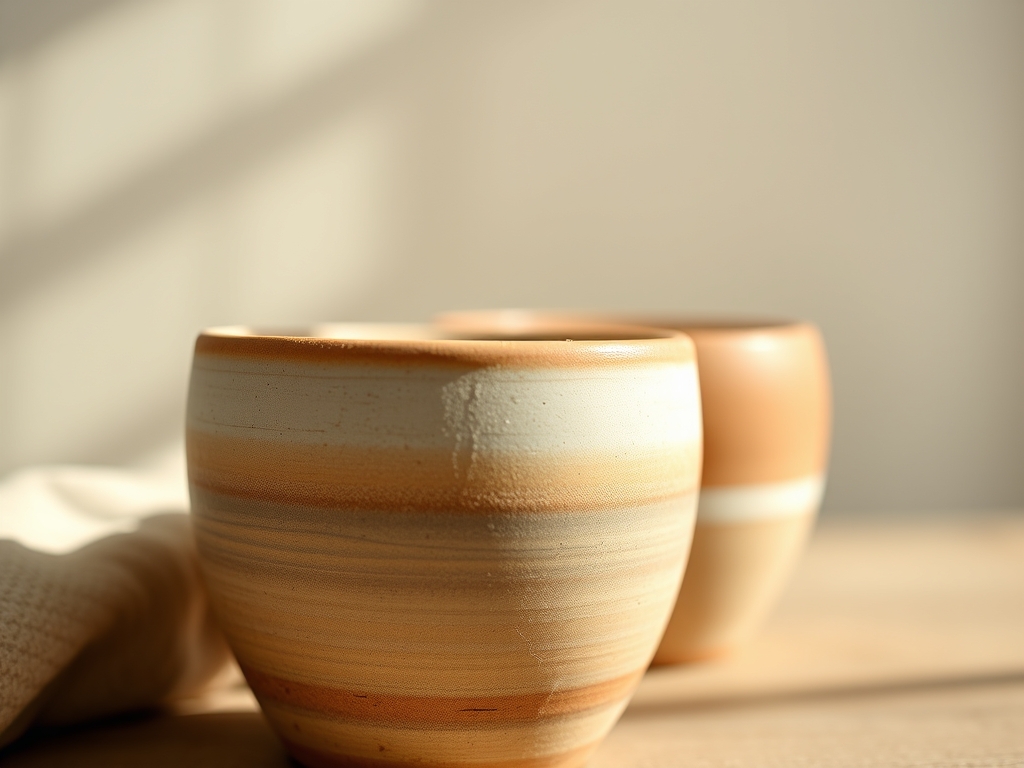
Imagine your hands coated in a cool, grey slurry of liquified earth as the centrifugal force of the wheel fights against your palms. There is a specific, electric moment when the clay stops resisting and starts to flow; it is the perfect marriage of physics and intuition. When you are creating Hand Thrown Planter Pots, you are not just making a vessel; you are managing the structural integrity of a porous medium designed to breathe. The tactile feedback of the spinning clay tells you exactly when the walls are thin enough to be elegant but thick enough to withstand the hydraulic pressure of damp soil. We are going beyond the basic smooth cylinder today. We are diving into the grit and the grain to create surfaces that catch the light and provide the perfect grip for your leafy roommates. It is about the friction between your tools and the spinning mass. It is about the way a serrated rib leaves a wake like a boat on a glassy lake. Grab your apron; we are about to get messy and scientific.
THE STUDIO KIT
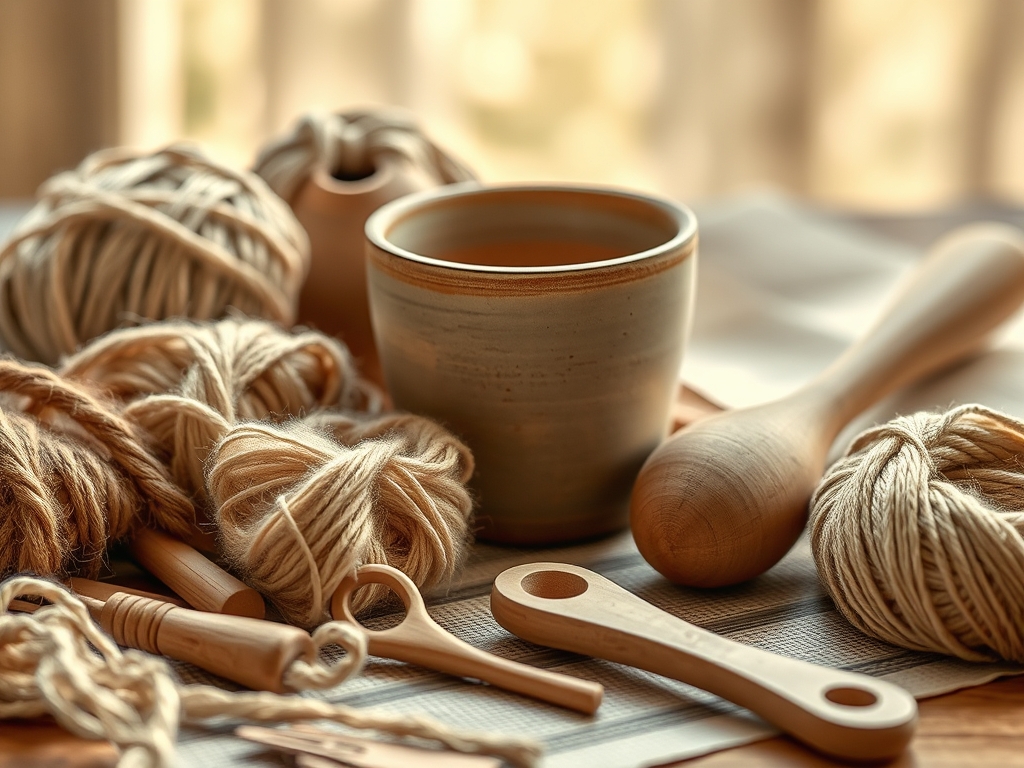
To master these textures, you need a kit that respects the **tensile strength** of your clay body. You will need a high-torque pottery wheel, a set of stainless steel **calipers** for measuring rim diameter, and a variety of wooden and rubber ribs. For the specific textures we are tackling, ensure you have a serrated metal scraper, a wire loop tool with a sharp edge, and a coarse sea sponge. The clay itself should be a mid-fire stoneware with a fine **grog** content; this added grit provides the structural skeleton needed to support heavy textures without collapsing under its own weight.
Material Substitutions: If you do not have a professional serrated rib, a common metal fork or even a fragment of a hacksaw blade works wonders for creating linear striations. Instead of a chamois cloth for smoothing rims, a strip of recycled plastic grocery bag provides enough surface tension to compress the particles without absorbing the moisture you need to keep the clay plastic.
THE TEMPO
The "Maker's Rhythm" is governed by the evaporation rate of water. You cannot rush the chemistry of drying. The initial throwing phase is high-energy and fast; usually 15 to 20 minutes per pot to prevent the clay from becoming over-saturated and "tired." Once thrown, the pots must enter the leather-hard stage, which takes anywhere from 4 to 12 hours depending on your studio's humidity. This is the golden window for texturing. If the clay is too wet, your tools will drag and create "burrs"; if it is too dry, the clay will chip and crack. The final curing process involves a slow, controlled dry over 3 to 5 days to prevent warping before the first bisque fire.
THE CORE METHOD
1. The Vertical Raking Technique
Once your cylinder is pulled and shaped, take a serrated metal rib and hold it at a 45-degree angle against the wall while the wheel is stationary. Drag the tool from the base to the rim in a single, confident stroke. Repeat this around the circumference. This creates deep, vertical channels that aid in capillary action, allowing moisture to evaporate evenly across the surface of the pot.
Mastery Tip: The angle of the tool dictates the depth of the groove. A steeper angle increases the frictional resistance, which can cause the wall to cave if you haven't maintained a consistent thickness during the throw.
2. The Spiral Chatter Finish
This is a high-speed maneuver. While the pot is spinning at a moderate RPM on the wheel, take a flexible metal loop tool and let it "bounce" lightly against the exterior. The vibration creates a rhythmic, stepped pattern that looks like a geometric wave. This texture increases the surface area of the pot, which is technically beneficial for plants that prefer a drier root environment, as it speeds up the gas exchange through the ceramic walls.
Mastery Tip: This relies on harmonic oscillation. If the tool is held too rigidly, it will simply gouge the clay; you must find the "sweet spot" where the tool's natural spring matches the wheel's velocity.
3. The Coarse Grit Erosion
For a weathered, ancient look, take a dry, coarse sea sponge and press it into the surface while the clay is still slightly tacky. Then, using a burnishing tool or a smooth stone, lightly rub the high points. This creates a contrast between the compressed, shiny peaks and the open, porous valleys. It mimics natural stone erosion and provides a superior grip for the user.
Mastery Tip: This technique exposes the internal grain of the clay. By compressing the high points, you are locally increasing the density, which helps prevent the pot from becoming brittle in those specific areas.
4. The Faceted Shear
Using a sharp wire tool or a professional fettling knife, slice away thin "skins" of clay from the exterior of a thick-walled pot. This creates flat, architectural planes. This is best done when the clay is on the firmer side of leather-hard to ensure the edges stay crisp and don't slump.
Mastery Tip: This is an exercise in structural geometry. Every facet you cut removes weight, which can shift the center of gravity of your Hand Thrown Planter Pots. Always check the interior balance with your calipers after shearing.
5. The Impressed Botanical Grain
Take a piece of burlap or a dried leaf and press it firmly into the clay using a wooden pony roller. The pressure forces the fibers into the clay body, leaving a detailed negative relief. This is a delicate process that requires you to support the interior wall with your hand to prevent the pot from deforming under the lateral pressure.
Mastery Tip: The depth of the impression affects the thermal expansion during firing. Deep, uneven textures can cause localized stress points, so ensure your impressions are of a uniform depth to prevent "S-cracks" in the kiln.
THE TECHNICAL LEDGER
Maintenance & Longevity: To ensure your textured pots last for decades, they must be fired to their full vitrification point. This ensures the clay particles fuse together, making the pot frost-resistant. Clean the textures with a soft nylon brush to prevent mineral buildup from hard water.
Material Variations: For a premium finish, use a porcelain slip over a stoneware body; the porcelain will settle into the textures and create a translucent depth. For sustainability, reclaim your "slop" (the leftover mud from throwing) and mix it with 10% fresh paper pulp to create a paper-clay that is incredibly strong and resistant to thermal shock.
The Correction:
- The Slump: If the wall collapses during texturing, your clay was too wet. Fix: Use a heat gun to quickly reach leather-hard status before continuing.
- The Burr: If the tool leaves ragged edges, the tool is dull or the angle is wrong. Fix: Sharpen your loop tools with a fine-grit diamond file.
- The Crack: If a texture line turns into a crack, the drying was too fast. Fix: Rub a small amount of "vinegar slip" (clay mixed with white vinegar) into the crack to chemically bond the edges back together.
Studio Organization: Store your unfinished pots in a "damp box"—a sealed plastic container with a layer of wet plaster at the bottom. This maintains 100% humidity and prevents the evaporative cooling that causes uneven drying and warping.
THE FINAL REVEAL
There is nothing quite like the moment you pull a finished planter out of the kiln. The way the glaze breaks over the sharp edges of a faceted pot or pools in the valleys of a raked texture is pure magic. These Hand Thrown Planter Pots aren't just containers; they are functional sculptures that celebrate the physics of the earth. Your plants will thrive in the breathable, textured environment, and your shelves will look like a high-end boutique gallery.
STUDIO QUESTIONS
Why does my planter pot crack at the bottom?
Cracks usually occur due to uneven drying or "S-cracks" from trapped tension. Ensure you compress the base firmly with a wooden rib during the throwing process to align the clay particles and increase the base's tensile strength.
What is the best clay for Hand Thrown Planter Pots?
Stoneware with added grog is ideal. The grog acts as a structural skeleton, reducing the overall shrinkage rate and providing the "tooth" necessary to hold deep, complex textures without the vessel collapsing on the wheel.
How do I make my textures pop after firing?
Use an "oxide wash" or a "breaking glaze." These formulas are designed to run off high points and settle into the recesses of your texture, highlighting the topographical contrast you created during the carving phase.
Can I texture the inside of the planter?
It is generally avoided. A smooth interior allows for better root expansion and easier repotting. A textured interior can trap salt and mineral deposits, which may eventually interfere with the porosity and health of the plant.