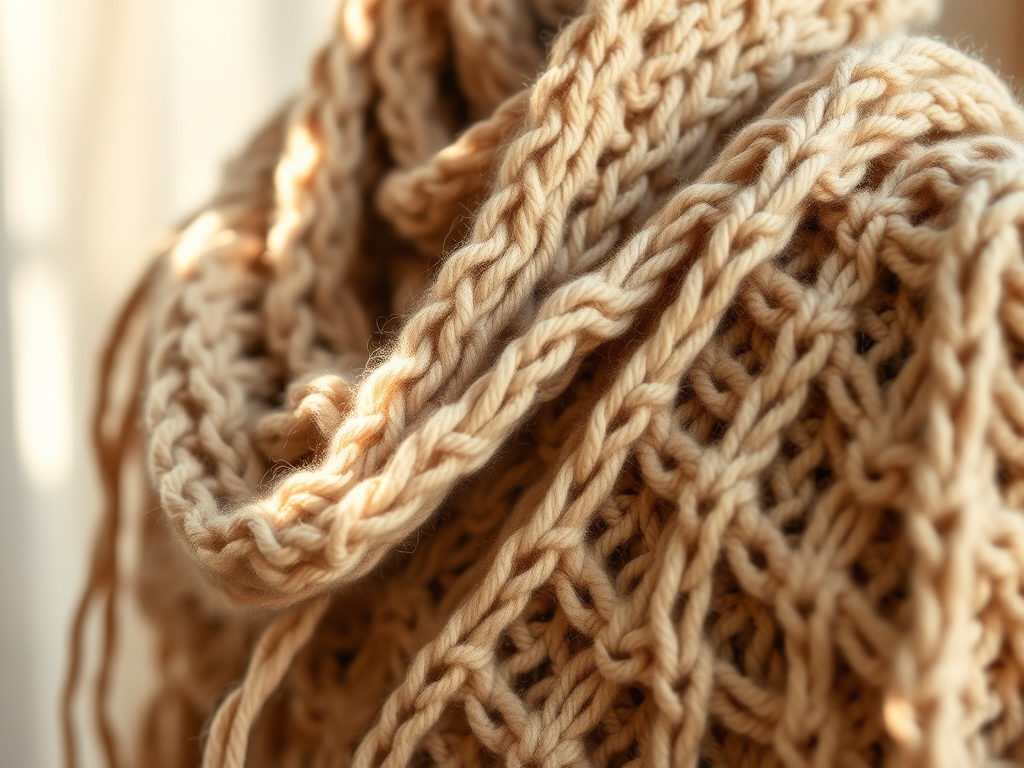
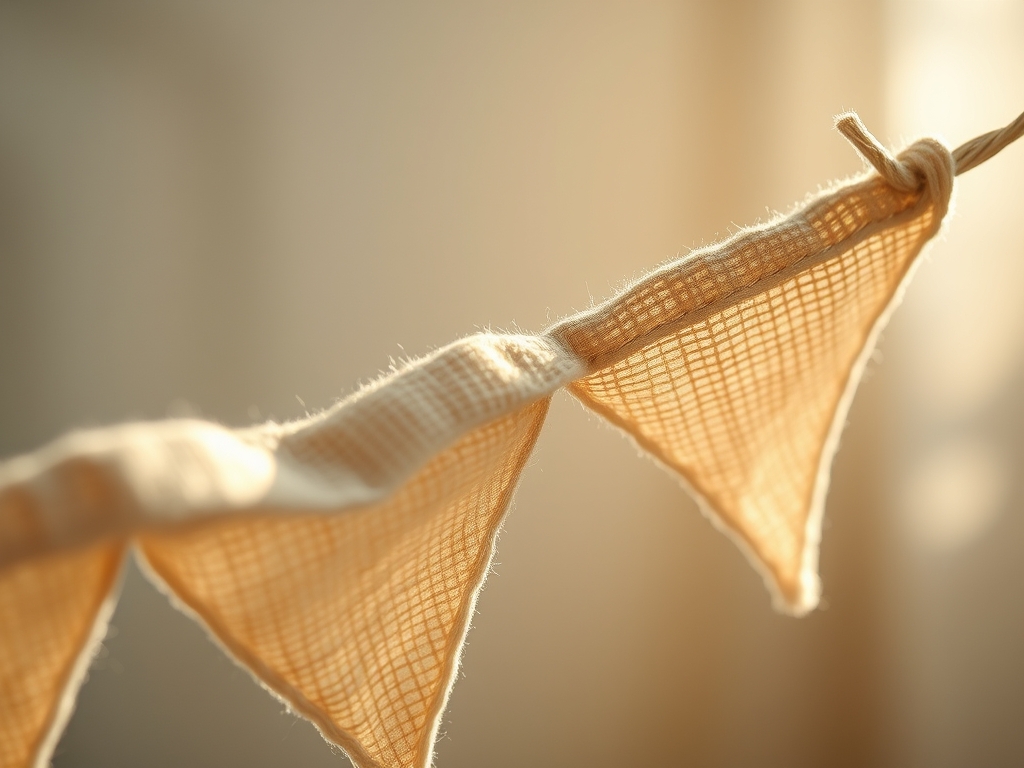
Close your eyes and listen to the crisp, rhythmic snap of heavy-gauge flax fibers as they yield to the blade. There is something profoundly primal about the tactile resistance of authentic linen; it is a material that demands respect because of its high tensile strength and irregular, organic slubs. When you decide to create Hand Stitched Linen Bunting for a birthday celebration, you are not just hanging scrap fabric on a string. You are engineering a legacy piece that balances the structural integrity of the weave with the delicate aesthetic of a hand-finished heirloom. The smell is earthy, reminiscent of dried grass and rain, while the feel is cool and slightly waxy due to the natural pectin found in the plant fibers. This is the ultimate celebration of slow craft. We are moving away from the disposable, plastic-coated streamers of the past and stepping into a world where every triangular pennant is a testament to precision, patience, and a bit of studio magic. Let us get our hands dirty and our lines straight.
THE STUDIO KIT
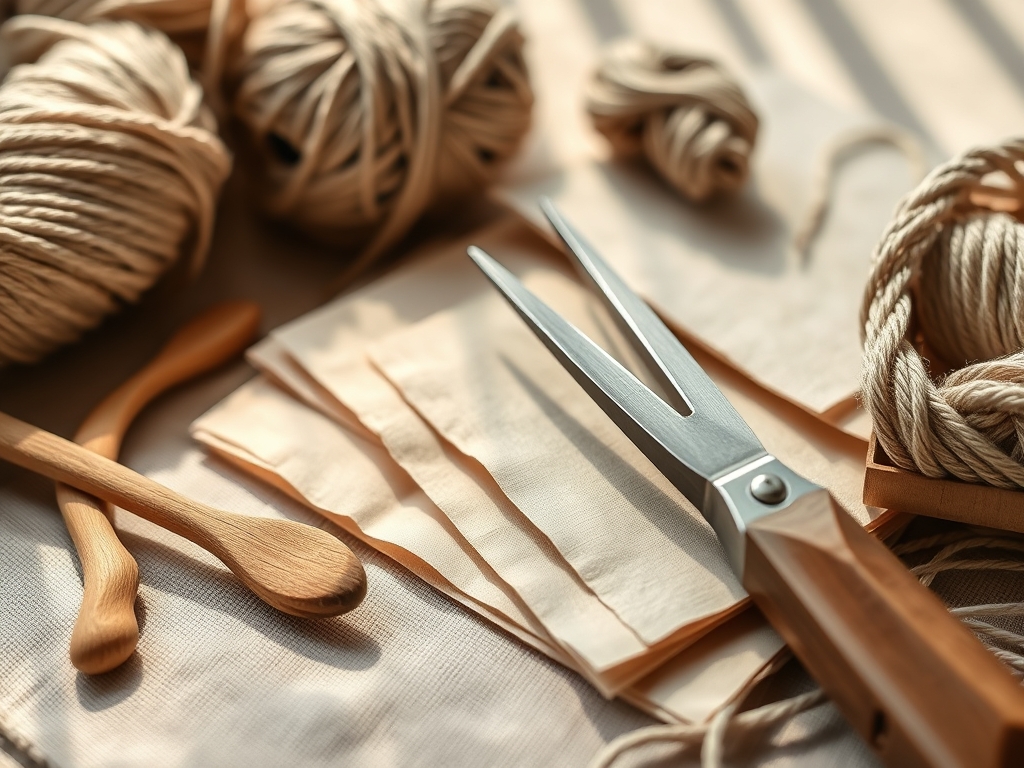
To master this project, your workbench needs more than just a pair of kitchen shears. We are looking for tools that respect the grain direction of the textile. You will need a rotary cutter with a fresh 45mm tungsten carbide blade to ensure clean edges without fraying the warp and weft. Grab a bone folder for crisp, permanent creases and a self-healing cutting mat to protect your workspace. For the stitching, select a size 24 tapestry needle; its blunt tip navigates the porous gaps in the linen weave without piercing the individual threads. Your thread should be a 3-ply waxed linen cord or a high-quality perle cotton to ensure the knots do not slip under tension.
Material Substitutions: If you cannot source 100 percent Irish linen, look for a hemp blend. Hemp offers similar antimicrobial properties and a high "wet strength," meaning it will not sag if your outdoor party meets a light drizzle. Avoid synthetic polyesters; they lack the friction required for a secure hand-stitch and will often "puckering" at the seams due to their elastic memory.
THE TEMPO
The "Maker's Rhythm" is a psychological state where your fine motor skills sync with the material's resistance. For a standard five-meter strand of Hand Stitched Linen Bunting, expect to invest approximately six hours of active labor. The Preparation Phase (measuring, cutting, and ironing) takes about 90 minutes. This is the most critical stage because an error of even two millimeters in your template will compound across twenty flags. The Construction Phase (the actual hand-stitching) requires about three hours. This is your meditative zone. Finally, the Finishing Phase (burnishing edges and stringing) takes 90 minutes. Do not rush the cooling period after steam-pressing; the fibers need time to "set" into their new geometric configuration.
THE CORE METHOD
1. Template Geometry and Calibration
Use a metal ruler and a chalk pencil to draft an isosceles triangle on a piece of heavy cardstock. The base should be 15cm with a height of 20cm. This ratio provides the best visual weight when the bunting is suspended.
Mastery Tip: Always align the long side of your triangle with the straight grain (warp) of the fabric. This utilizes the vertical strength of the fibers to prevent the pennant from curling or "dog-earing" over time due to gravity.
2. The Precision Cut
Lay your linen flat on the cutting mat. Use your rotary cutter to slice through the fabric in single, fluid motions. If you use scissors, you risk "chewing" the edges, which creates micro-frays that will degrade the structural integrity of the bunting.
Mastery Tip: Apply consistent downward pressure to the rotary blade to engage the shear force required for a clean separation of the pectin-bonded flax fibers. This minimizes the release of lint into your studio environment.
3. The Bone Folder Crease
Fold the top edge of each triangle over by 2cm. Use your bone folder to press this fold flat. The friction of the bone folder generates a small amount of heat, which helps the cellulose fibers in the linen to collapse into a permanent crease.
Mastery Tip: This mechanical "break" in the fiber prevents the fabric from springing back. It creates a structural channel for your hanging cord that remains stable without the need for chemical stiffeners.
4. The Running Stitch Execution
Thread your needle with approximately 50cm of waxed cord. Use a running stitch with 4mm spacing to secure the fold. Keep your tension even; if you pull too hard, the linen will gather; if too loose, the pennant will slide along the rope.
Mastery Tip: Utilize the capillary action of the wax on your thread. The wax acts as a lubricant as it passes through the fabric but then creates a friction-lock once the stitch is seated, ensuring the bunting remains spaced exactly where you want it.
5. Corner Reinforcement
When you reach the edges of the triangle, perform a backstitch or a small "X" pattern. This area experiences the highest amount of stress when the bunting is pulled taut between two points.
Mastery Tip: By doubling the thread at the stress points, you distribute the tensile load across a larger surface area of the weave, preventing the thread from "sawing" through the linen during windy outdoor events.
6. The Steam Set
Once all pennants are stitched onto the main bias tape or rope, use a high-pressure steam iron to press the entire assembly. The moisture relaxes the hydrogen bonds in the linen, allowing them to reform in a perfectly flat, professional finish.
Mastery Tip: This process is known as hydro-setting. It ensures that your Hand Stitched Linen Bunting maintains its crisp, triangular profile even after being packed away in a storage bin for months.
THE TECHNICAL LEDGER
Maintenance & Longevity: Linen is incredibly durable but susceptible to mildew if stored damp. Always ensure the bunting is 100 percent dry before packing. If it becomes soiled, hand wash in cool water with a pH-neutral detergent to protect the natural fibers.
Material Variations:
- Sustainable: Use reclaimed vintage linen tablecloths for a soft, lived-in feel.
- Premium: Opt for "Belfast Linen" with a high thread count for a luminous, silky sheen.
- Recycled: Incorporate linen-look scraps from upholstery projects for a heavy-duty, textural contrast.
The Correction:
- The Sag: If your bunting looks limp, the thread tension is too low. Fix by "massaging" the stitches outward from the center.
- The Fray: If edges are shedding, use a tiny amount of fabric sealant on the tips, or use a "pinking" blade for a decorative, fray-resistant edge.
- The Twist: If pennants are flipping over, your hanging cord is too light. Swap the string for a heavy jute or cotton twill tape to provide a better weight-to-surface-area ratio.
Studio Organization: Store your finished bunting by wrapping it around a wide-diameter cardboard tube. This prevents sharp creases from forming in the center of the flags, which can weaken the fibers over time.
THE FINAL REVEAL
Look at that! You have successfully engineered a masterpiece of celebratory decor. Your Hand Stitched Linen Bunting is not just a party accessory; it is a high-performance textile installation. The way the light catches the natural slubs in the fabric and the rhythmic precision of your hand-stitching creates a visual depth that machine-made items simply cannot replicate. Whether it is draped across a sun-drenched garden or hanging over a birthday cake, this bunting carries the energy of your focus and the strength of the flax plant. It is sophisticated, witty, and built to last for a century of birthdays.
STUDIO QUESTIONS
What is the best thread for hand stitching linen?
A waxed linen thread or a high-quality perle cotton is best. The wax provides a friction-lock that prevents stitches from slipping, while the cotton offers the necessary tensile strength to hold the heavy flax fibers in place during use.
How do I prevent the edges of linen bunting from fraying?
Use a rotary cutter for a clean, compressed edge. For extra security, you can apply a light "stay-stitch" 2mm from the edge or use a pinking blade to create a zig-zag pattern that interrupts the unraveling of the weave.
Can I wash my hand stitched linen bunting?
Yes, but only by hand. Use cool water and a pH-neutral soap. Avoid agitation, as this can distort the hand-stitched tension. Lay the bunting flat on a towel to air dry to prevent the fibers from stretching under water weight.
Why does my linen bunting curl at the corners?
This usually happens when the fabric is cut off-grain. To fix this, ensure the long sides of your triangles follow the vertical warp threads. A final steam-press with a heavy iron will also help flatten the cellulose fibers and set the shape.